Tuesday, April 21, 2015

Gluten?

Lately, people around the world have been joining a new dieting trend. About 1% of the population suffers from celiac disease, an inherited autoimmune disease that causes damage to the small intestine when gluten is consumed. Others may simply have non-celiac gluten sensitivity, which is simply an intolerance to gluten that causes similar symptoms. Some of these symptoms include skin, growth and digestive problems as well as anaemia, irritability and fatigue. A gluten free diet. However, the controversy lies on whether or not it is healthy for people, who do not suffer from celiac disease or intolerance to gluten, to have a gluten free diet.

study done in 2011 by Peter Gibson, a professor of gastroenterology at Monash University and the director of the G.I. unit of the Alfred Hospital in Melbourne, provided evidence that proved that gluten could be harmful for people who did not have celiac disease. He recruited thirty-four people with irritable-bowel syndrome. He put half of them in a strict gluten-free diet and half of them in a diet with controlled gluten intake. In his experiment he gave half of them muffins that had gluten and the other half muffins that didn't, and he controlled the rest of their diets. The ones who ate the gluten muffins complained about pain and about having some of the symptoms that gluten intolerance causes. The ones who didn't have any gluten intake remained fine. Still, it is important to take into account that it was a really small study and that all the patients in his study had irritable-bowel syndrome, which is an intestinal disorder that causes stomach pains, gas, diarrhoea and constipation. Which means that it is most likely not true for most people.


The main problem with most diets is that people don't do them carefully. They stop eating things that may contain nutrients that are necessary for their health. This is also the main problem with gluten free diets. Whole grains, which contain gluten, are a good source of fiber, vitamins and minerals which are crucial for maintaining a healthy diet, but gluten-free products are often made with refined grains, and are low in nutrients. This can cause fiber, iron, folate, niacin, thiamine, calcium, vitamin B12, phosphorus and zinc deficiency. The point of going on a diet is eating healthier to be fit. This could mean loosing or gaining weight. The reason people start gluten free diets is because they can lead to wight loss since they reduce the carbohydrate intake. Nevertheless, this can be achieved in healthier ways that do not involve loosing so many nutrients in the process. Your body needs these nutrients to survive and work, and a healthy diet is essential in order to get all the nutrients it needs. Still, it is not only about the diet. Sleeping habits, stress management, and exercise routines also influence  weight loss and healthy diets. 


Monday, April 13, 2015

Reflections. Revisions.


If I had to rewrite my research paper I would probably change some things. In terms of citation and sources, I would include footnote citations as well as the bibliography and the episode citations that I had. I would fix the bibliography's indentations of the second line. I would look for more sources about linguistics relating to foster care directly as well so I can include other examples that might relate to the character that I am talking about.

Another thing that I would edit, is my analysis about the show. I would connect it with what I spoke about before about foster care, this way I can combine the things about the real life foster care system and how it affects linguistics, with the things about Bones. I would also begin talking about Temperance Brennan earlier in the paper to combine it better.

Positive Stress

Stress is something that we all have to deal with. Nevertheless, people don't always respond to stress the same way so sometimes stress doesn't actually look like stress. Some people can get angry and agitated, others might get sad and shut down and others may tense and freeze up. Some people are more prone to stress,

Still, stress is inevitable. It is a natural response to both good and bad experiences, in which your body releases hormones, increasing your heart and breathing rates that cause your brain to get more oxygen, so you can deal with the situation. However, chronic stress can affect your health negatively. It is a type of stress that is constant and very high. It causes depression, insomnia, anxiety, hypertension, problems in the heart and blood vessels, nausea and respiratory problems, they also have a higher risk of heart attacks and strokes. People who have chronic stress tend to get sick more often and more easily because their immune system is not working properly. 75% - 90% of all doctors office visits are for stress related complaints, and 43% of all adults suffer from negative health effects that are caused by stress.

Another reason that stress is negative comes from the way people try to relieve it. People tend to use drugs, alcohol, tobacco to get rid of their stress. The problem is that these tend to keep the stress levels high. Nevertheless, when they do help achieve the relief that was being pursued, they become dependant. People begin to rely on the drugs to achieve the relief, they use more and more of them and become alcoholics, or drug addicts. It becomes an escape rout. Others try to ignore the situations, but later on when they finally have to face the facts and problems, they get even more stressed. 

On a Ted talk, Kelly McGonigal, a health psychologist, explains that stress doesn't always have to be a negative thing. She says that stress is negative because we view it as so. However, if we changed the connotation of stress, from negative to positive, stress would be even more beneficial. She says that the only reason stress becomes bad for you and has a negative effect on your health is because you thunk it will. 

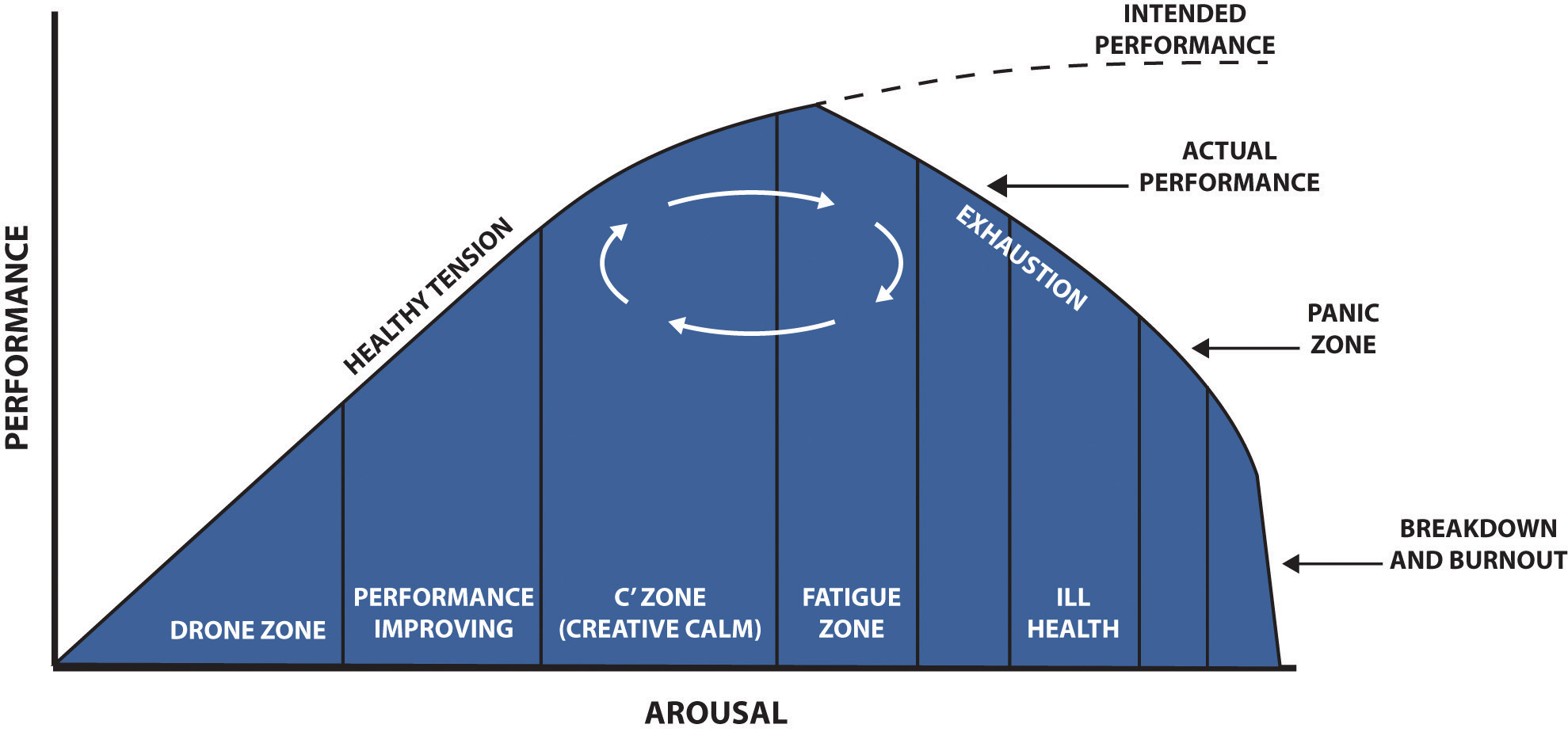
This is true until stress becomes chronic stress. If you decide that stress can be helpful and use it to your advantage you can work harder and better. After all, no one can remain completely relaxed unless they meditate, so to do anything at all they need to have at least a small level of arousal. However when stress becomes chronic, even if you don't realize it because it becomes a 'normal level' for you, it takes a strain on the body. You may become ill and you may feel fatigue, and exhaustion. There is nothing you can do about that by thinking about stress a different way.